BioTech & MedTech Startups
Attract investment & partnerships
Alongside traditional educational formats, game-based approaches are increasingly recognized for their ability to drive deeper engagement and lasting knowledge retention. They turn complex science into an experience that people actively participate in.
We design interactive and gamified experiences for HCPs, patients, and internal teams - blending scientific accuracy and methodology with game mechanics.

Business Objective: Increase engagement with existing digital channels
We incorporate gamified experiences with interactive challenges, progress tracking, and reward mechanics into existing websites, Apps, and LMS.
We integrate them seamlessly into your existing infrastructure to make everyday interactions more motivating and engaging.

Business Objective: Improve understanding and reinforce knowledge
We turn complex medical and scientific information into interactive learning experiences where HCPs and patients can explore concepts, make decisions, and learn through play.
Built around scientifically validated content, each experience combines clear educational objectives with game mechanics.

Business Objective: Drive campaign engagement
We create memorable, bite-sized gaming experiences that bring people back for another round.
From congress activations to digital campaigns, these fun, replayable challenges combine entertainment with meaningful scientific or brand messaging.
Situation:
A global pharmaceutical company approached us addressing physician fatigue caused by long, monotonous webinars. The client faced an urgent challenge: training general practitioners (GPs) to spot specific, early red flags of complex GI disorders and refer patients to specialized gastroenterologists in a timely manner. They needed a fresh, highly engaging format.
Action:
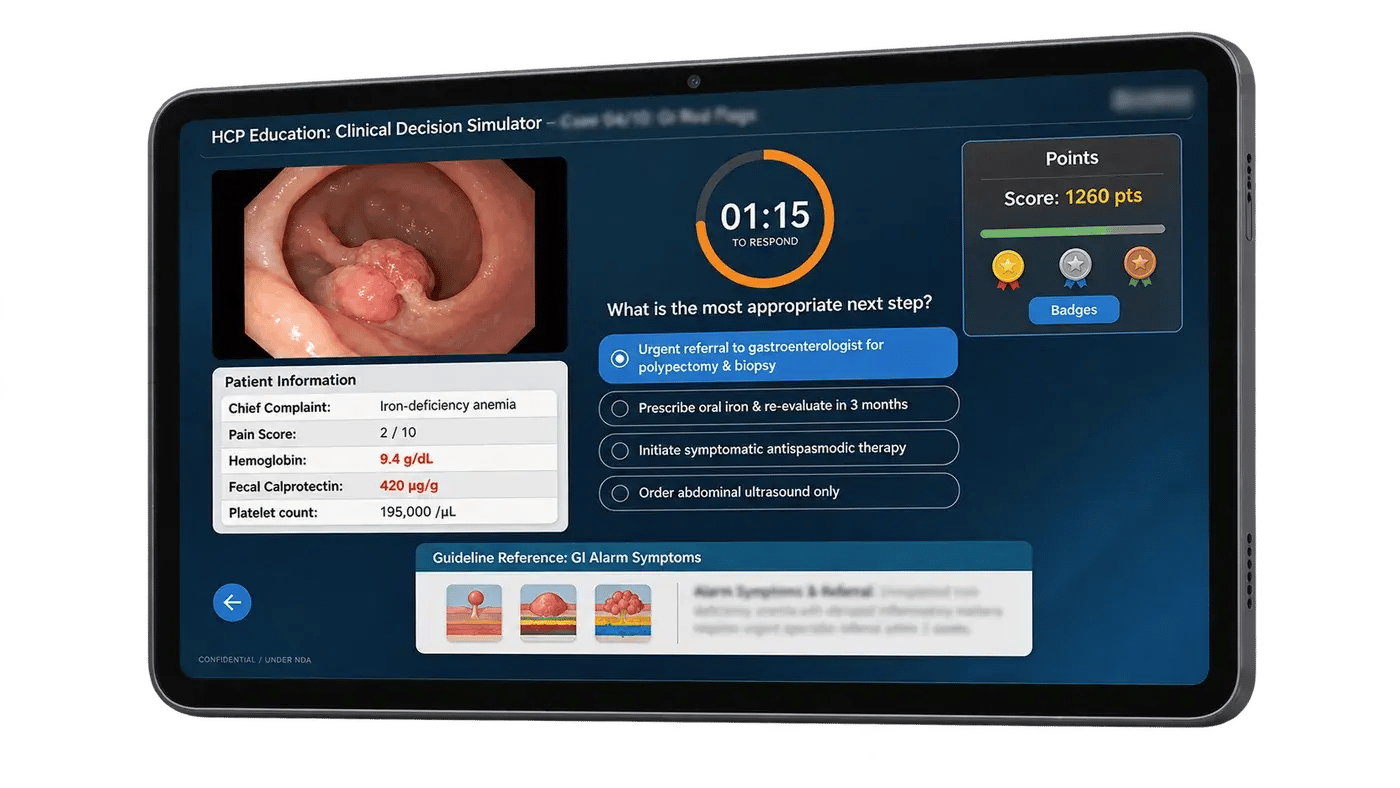
We developed a gamified clinical decision-making simulator featuring 10 real-world clinical scenarios, each with a 1.5-minute time limit for making diagnostic decisions. Physicians analyze endoscopic imaging and lab markers, establish a diagnosis, and select treatment strategies, earning engagement points along the way. The platform provides instant, tailored feedback on right and wrong decisions, backed by direct references to current clinical guidelines.
Result:
76% of specialists completed all 10 clinical scenarios. The fast-paced timed rounds brought the average session time to ~14 minutes (compared to just 1.5 minutes on traditional educational portals). Follow-up testing demonstrated a +42% increase in diagnostic and referral confidence: physicians under 35 praised the dynamic gamification mechanics, while clinicians aged 35–55 highlighted the immediate, practical value of instant guideline-backed feedback.
76%
completed all 10 scenarios
14 min
average session • vs. 1.5 min
+42%
diagnostic & referral confidence
Situation:
A commercial-stage biotech company was preparing for an international medical congress. Traditional roll-ups and paper brochures failed to attract delegates, as healthcare professionals increasingly tune out standard marketing materials and seek peer-to-peer insights. The brand needed an interactive solution to spark authentic professional dialogue.
Action:
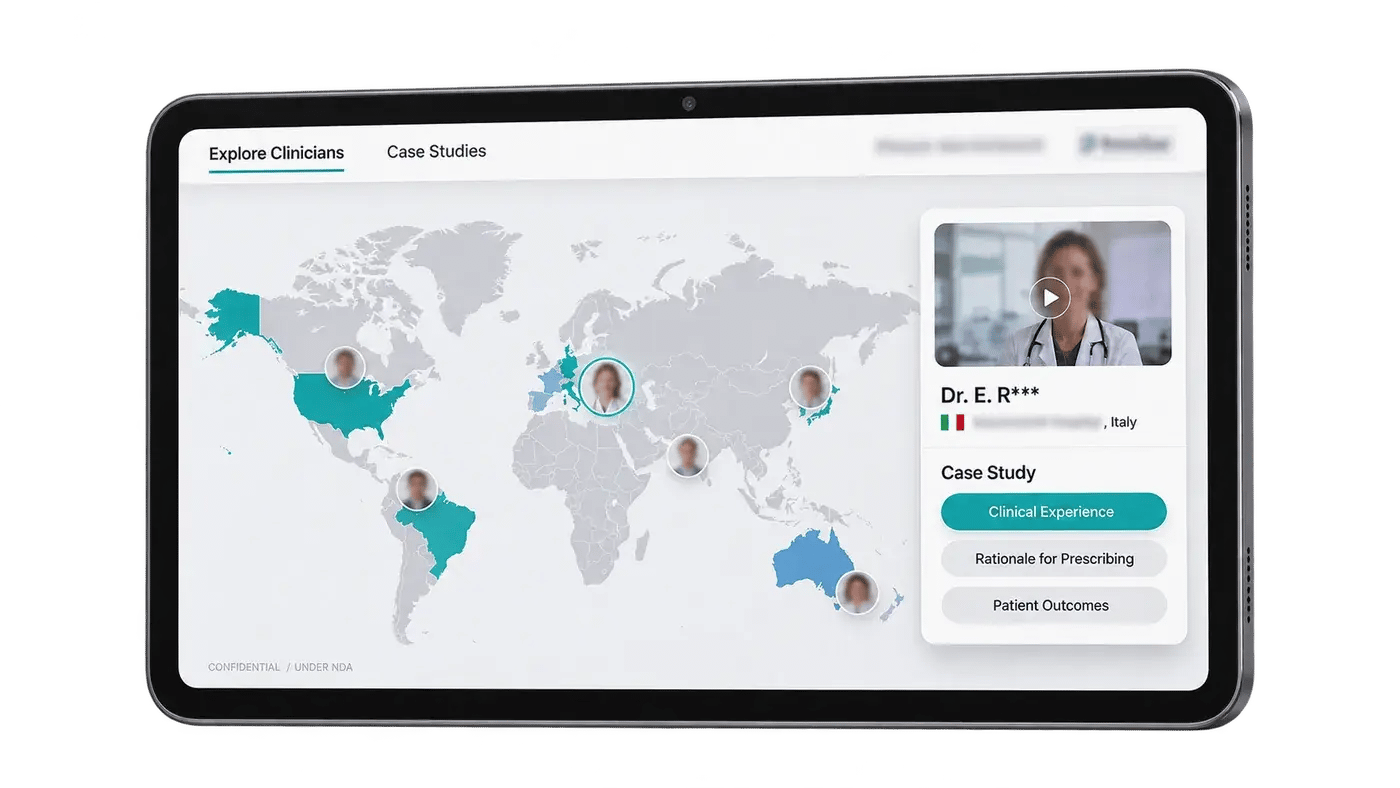
We engineered an interactive touchscreen experience featuring a global mosaic map of practicing clinicians. Visitors tapped on interactive peer avatars across various countries and institutions to unlock concise video case studies, where doctors shared real clinical experiences, rationale for prescribing the therapy, and practical patient outcomes. The experience felt like a dynamic peer-to-peer community sharing validated clinical solutions.
Result:
Over 500 interactions logged across the two-day congress, making it one of the most visited booths at the event. 92% of participating doctors stated that authentic peer video insights were significantly more compelling than printed product brochures. The average dwell time was 3.5 minutes, providing medical science liaisons and sales teams with an effortless transition into deep, qualified clinical conversations.
500+
interactions across the two-day congress
92%
preferred authentic peer video insights
3.5 min
average dwell time
Situation:
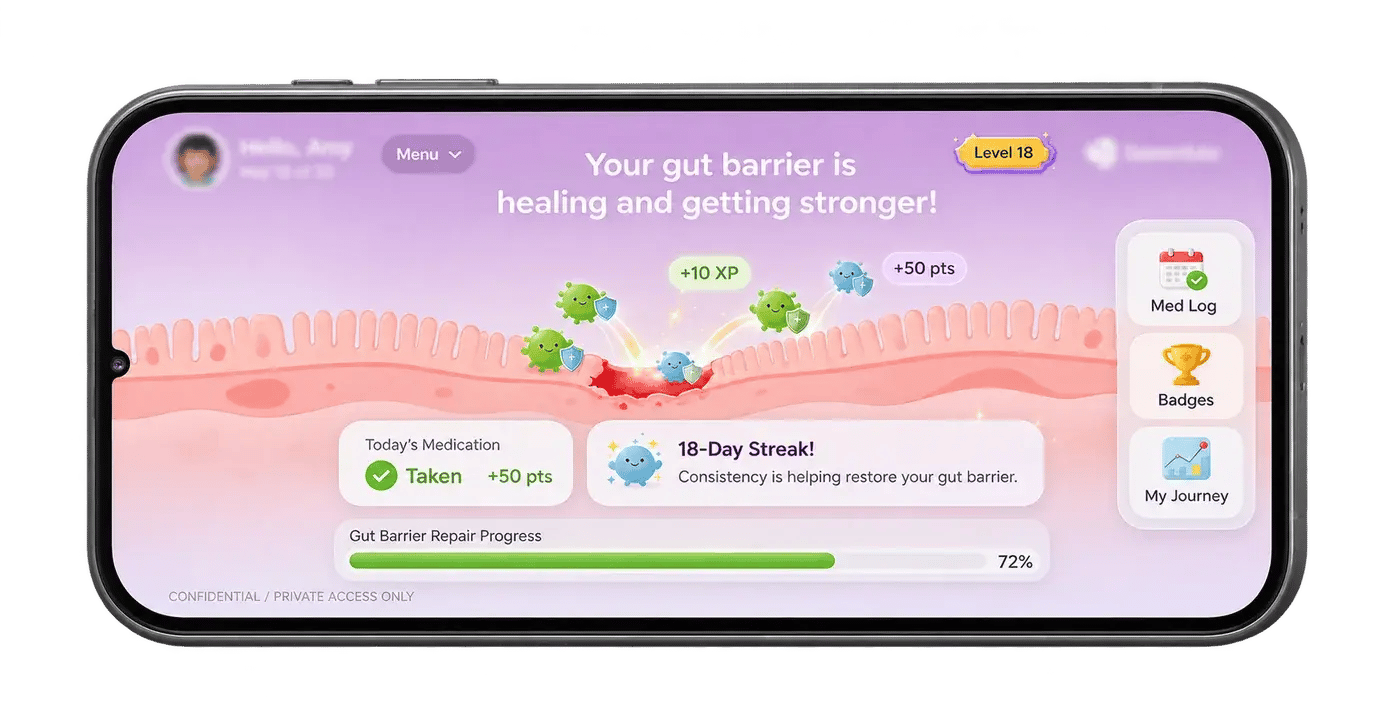
A biopharma company producing a specialized therapy for rare conditions and targeted microbiome restoration faced high drop-off rates at weeks 2–3 of treatment. Without immediate symptomatic relief, patients struggled to appreciate the gradual mucosal healing process and abandoned their prescribed regimen prematurely.
Action:
We developed an intuitive mobile web game companion accessible exclusively via a private link or personalized QR code provided by the treating physician. Patients logged daily medication adherence, visually seeing beneficial microflora gradually repair gut mucosal micro-damage. Missing a dose dynamically slowed barrier formation, motivating treatment consistency through empowering self-care rather than alarmist messaging.
Result:
60-day full-course therapy adherence increased by +35%. 68% of patients reported reduced health anxiety and a clearer understanding of their treatment journey through visual disease-state education. The app achieved a 4.8/5 usability rating, while the private-access loop ensured strict clinical privacy for prescription-only patients
+35%
60-day full-course therapy adherence
68%
reported reduced health anxiety
4.8/5
usability rating
Situation:
An innovative MedTech manufacturer of surgical robotic systems faced sales cycle bottlenecks: hospital procurement committees and surgical centers hesitated to purchase, uncertain whether the bulky robotic console and robotic arms would fit within their existing or space-constrained operating rooms.
Action:
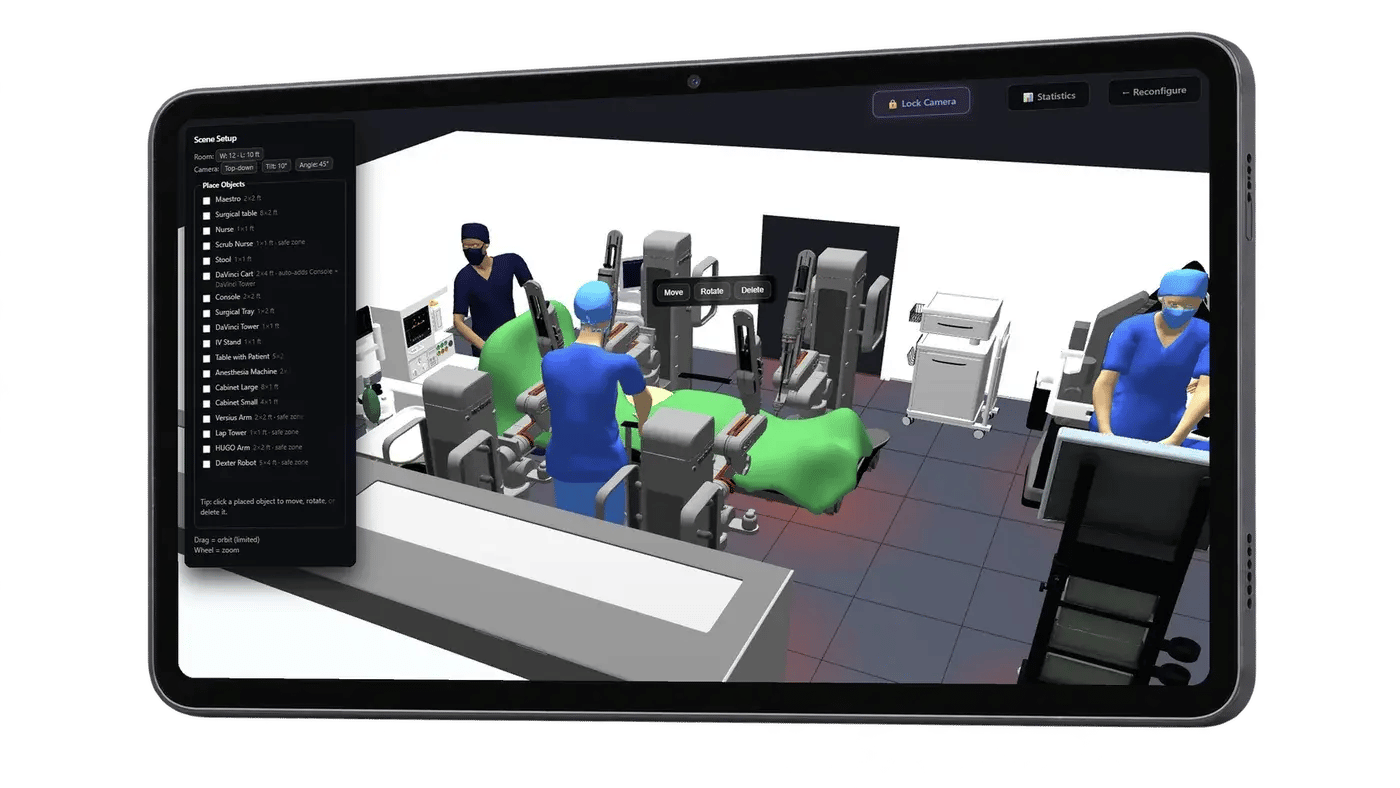
We created an interactive 3D Operating Room Planner. Hospital stakeholders and sales reps could enter room dimensions, arrange standard OR infrastructure (operating table, overhead surgical lights, anesthesia towers), and position a true-to-scale 3D robotic system in real time. The solution enabled teams to test robotic arm clearance, assess sterile field ergonomics for surgical staff, and validate architectural feasibility prior to signing contracts.
Result:
Technical facility validation cycles were reduced by 40%, replacing cumbersome engineering blueprints with instant interactive visual proof. Demo-to-site-inspection conversion rates rose by +28%, equipping the commercial team with a high-impact digital deal-closer for hospital c-suite and surgical department leads.
−40%
technical facility validation cycles
+28%
demo-to-site-inspection conversion

Across randomized controlled trials, digital serious games have been shown to significantly improve knowledge and behaviour compared with traditional education methods — with repeated-session formats producing even stronger results than single-use content. This makes game-based learning a measurable upgrade for HCP training, not just a more engaging one.
JMIR 2026 Bayesian network meta-analysis of 40 RCTs on digital serious games in public health education.

In pediatric and procedural settings, interactive game-based distraction has been shown to meaningfully reduce children’s pain and anxiety — and even ease anxiety for the caregivers supporting them. These interventions come with minimal downsides and consistently high patient satisfaction, making them a practical addition to standard care protocols.
UNSW Sydney meta-analysis of 34 studies on interactive video games for pediatric procedural pain and anxiety.


Book a one-hour free consultation with our expert