








.svg)





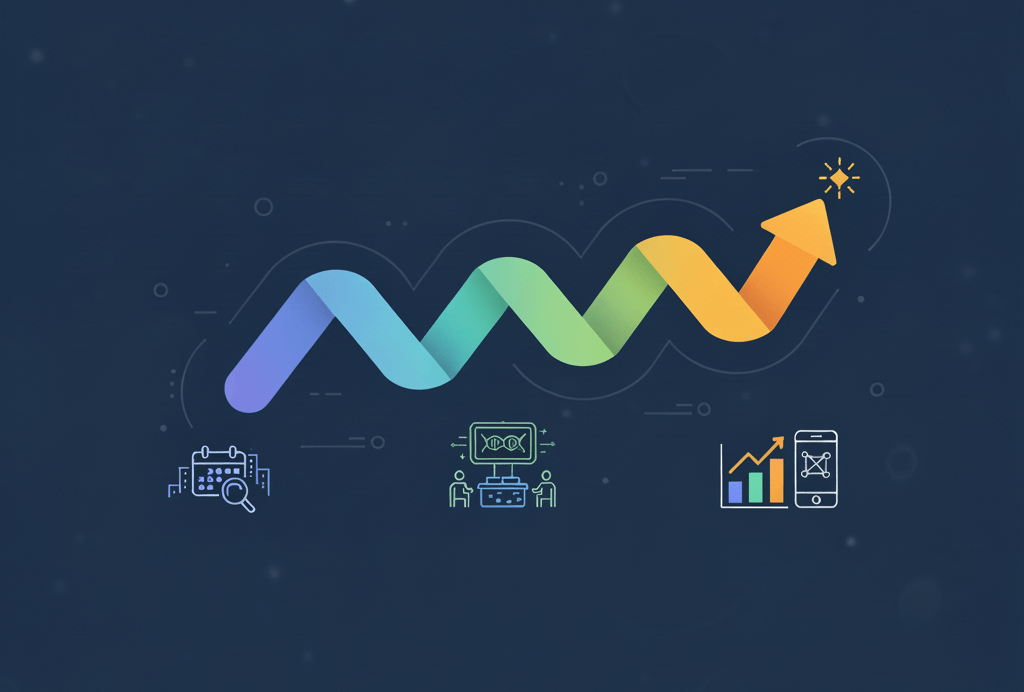
Industry conferences and scientific congresses can be much more than networking opportunities. In fact, they are often irreplaceable for meeting new customers, showcasing capabilities, and accelerating partnerships. However, to turn attendance into measurable value, CROs, CDMOs, and diagnostics innovators must approach events with precision, planning, and a clear purpose.
So, we prepared this guide that outlines a practical, end-to-end framework for pre-, during-, and post-event activities to align your internal teams, attract key decision-makers, and drive business outcomes long after the event.
Pre‑Event
Effective event participation starts with thoughtful, early planning. Research shows that organizing logistics, marketing, and stakeholder outreach 3–6 months ahead significantly increases ROI - allowing key players to save time for meetings and presentations. Additionally, you ensure all your materials will be ready for the big day.
Goal Setting
Before launching campaigns and content, you should clearly define what success looks like for your company specifically. Depending on your general business objectives, identify the relevant goals and KPIs for the event, as this will shape every next step of the event preparation - from messaging to measuring ROI after the show. Here’s how to approach it:
1. Define your target audience - key decision-makers you want to reach: CRO - biotechs, pharma. Diagnostics - hospital managers, healthcare professionals, KOLs, distributors;
2. Prioritize objectives depending on your business strategy:
-
Streamline lead generation - build a qualified pipeline of new prospects.
-
Raise brand awareness - connect with current clients and introduce your latest innovations to new audiences, position your team as experts in the field;
-
Secure partnerships - identify distributors, clinical partners, or investors for future collaborations;
-
Sales - focus on conversations that convert directly into product trials, platform evaluations, or purchase agreements;
-
Demonstrate technical capabilities - showcase your platform’s unique features, or engineering depth through live demos, case studies, or technical data;
-
Launch a product - use the event to introduce a new assay, platform, or service. Capture attention with hands-on experience and exclusive previews.
3. Define measurable KPIs (see our examples below):
-
50 qualified meetings scheduled;
-
20 capacity or validation inquiries captured;
-
10 partnerships initiated;
-
25% increase in engagement with technical or case‑study content on the website.
These goals will be the core of your messaging, content assets, and post-event measurement frameworks.
Content Preparation
In today’s competitive life science landscape, your event presence needs to do more than look good - it needs to signal scientific credibility from the very first touchpoint. Before the show even begins, your audience is already evaluating which companies have the depth and reliability to be trusted partners.
That’s why content must do the heavy lifting, for example, science-forward assets that communicate rigor, results, and readiness to collaborate.
-
Short teaser videos or infographics explaining your methodologies or technological edge;
-
Case studies showcasing successful trials or diagnostic validations;
-
Whitepapers on technology, recommendations/blueprints on processes;
-
Client testimonials to build credibility.
From the very start, you have to deliver content that positions you as a reliable, expert partner who solves real pain points.
Omnichannel Visibility
Integrated SEO-optimized pages, targeted LinkedIn/Google ads, segmented email campaigns, and active social media promotion can increase qualified visitor turnout by more than 30%. Hence, you need to ensure visibility across multiple touchpoints for optimal reach of your target audience:
-
SEO-optimized event landing pages: event-related keywords, ensuring discoverability in the search engine;
-
Strategic paid ad campaigns: targeted ads across LinkedIn (ideal for reaching healthcare executives and hospital administrators), Google (targeting researchers and buyers), and Meta (for broader awareness among HCPs and distributors);
-
Segment-specific email campaigns - for biotech R&D leads, pharma innovation teams, diagnostics developers, or KOLs, who can later raise awareness about your brand, if they deem it a breakthrough);
-
Social media: post about speaker sessions, live demos, or product launches, highlighting key topics to resonate with the event agenda.
By clearly defining your goals, crafting science-driven content, and executing omnichannel outreach, you set the foundation for targeted engagement and measurable outcomes. With aligned messaging and visibility across every touchpoint, you enable your team to attract the right decision-makers and maximize every opportunity the event has to offer. That’s why the success of an event is defined months before you step into the venue itself.
During the Event
Now that the conference is underway, it's time to captivate, connect, and convert. So make every interaction count.
A seamless booth experience, strategic lead capture, and compelling presentations are crucial for standing out and achieving your goals of brand exposure, deal-making, and thought leadership.
Booth Experience
“It’s not about throwing money at spectacle. It’s about creating a memorable, meaningful experience. One that lives beyond the congress and into the hearts of the HCPs you want to reach.” - Andrew Nicholson
That’s why your booth isn’t just a display: it's proof of expertise, so make it immersive:
-
Interactive dashboards showing trial progress or manufacturing capacity;
-
VR/AR simulations of labs or production lines;
-
Live assay demos or diagnostic device walkthroughs;
-
Booth-to-digital extensions.
Lead Capture
Capturing leads is about collecting the right names with enough context to drive meaningful follow-ups later. We have some tips on how to optimize consent collection:
-
Use tablets or badge scanners integrated into your CRM to capture role, interest areas, and project timelines;
-
QR codes linking attendees to downloadable materials or follow-up booking forms;
-
Instant qualification questions during capture (budget, timeline, therapeutic area);
-
Train staff to ask key filters to qualify leads accurately.
Scientific Presentations
Scientific presentations are your opportunity to move beyond promotion and demonstrate real scientific value. Whether through panels, workshops, or posters, sharing validated data and expert insight reinforces your image with decision-makers. When thoughtfully executed, these sessions can spark deeper conversations and attract technical audiences:
-
Mini-workshops or sponsored panels on topics like trial design optimization, Pharma 4.0 (term coined by ISPE that describes the Industry 4.0 shift towards advanced technology, including AI and machine learning, cloud computing, and IoT) in CDMO processes;
-
Share real data: case study slides, success stories, throughput metrics, compliance processes;
-
Present scientific posters or use explainer videos to visualize process details or study designs or experimental protocols.
Networking
Proactively scheduling meetings with key stakeholders like sponsors, R&D leads, and lab managers ensures focused conversations. Meanwhile, engaging in event sessions, roundtables, and social gatherings helps deepen rapport and demonstrate your collaborative spirit, setting the stage for future partnerships.
Success at an event depends not just on presence but on purposeful engagement. By delivering immersive experiences, capturing qualified leads efficiently, showcasing scientific rigor, and nurturing meaningful connections, you maximize your impact and lay the groundwork for long-term collaborations and growth.
Post‑Event
Now, the actual work of nurturing and converting prospects begins - re-engaging attendees and continuing to expand your brand’s visibility. This is where strategic recap content and effective lead management become crucial to achieving a sustainable ROI.
Recap Content & Social Proof
After the event, your visibility shouldn’t fade - it should expand. We recommend capturing and sharing authentic moments from your booth, sessions, and interactions to help reinforce your credibility, increase brand recall, and spark engagement beyond those who attended. In addition, repurposing content also extends the event’s ROI across marketing channels.
-
Share post-event highlights: video snippets, photos, attendee feedback, workshop takeaways;
-
Publish blog posts summarizing presentations, emerging trends;
-
Reshare case study content and quotes from clients who visited your booth or attended sessions.
The next thing is strategic lead nurturing to drive conversions.
Lead Nurturing & Conversion
Now the real work begins.
Timely, personalized follow-up with high-intent leads is critical to maintaining momentum and advancing discussions. That’s when strategic segmentation and relevant content delivery come in handy. This will help you convert interest into action - whether it’s scheduling demos, sending proposals, or initiating partnerships
-
Contact high-intent leads within 24-48 hours;
-
Use CRM-driven segmentation: tier leads into interest categories and adjust your outreach accordingly.
Finally, there’s no growth without tracking and analyzing your performance.
Performance Analytics & Feedback
Post-event evaluation reveals whether your strategy delivered. From content engagement to lead conversion, tracking the right metrics allows you to quantify success and identify gaps. SO, we invite you to gather both internal and external feedback to enhance your future efforts, making each event more successful than the last:
-
Measure lead-to-proposal, proposal-to-contract conversion rates;
-
Track downloads, view counts, and bookings from gated content;
-
Survey attendees and internal teams for feedback: usability of materials, booth messaging clarity, and what resonated.
The true value of an event is often revealed after it has ended, though. But by sharing compelling recap content, nurturing leads with relevant follow-ups, and analyzing performance data, you can significantly extend the life and impact of your presence. More importantly, this stage allows you to prioritize high-potential opportunities, refine your go-to-market strategy, and lay the groundwork for stronger performance at future events.
Bonus
Beyond presentations and leads, your commercial positioning matters at every stage - from booth conversations to post-event follow-ups. So, speak about it. Highlight the operational and strategic benefits of your solution: timelines, pricing, etc. Show you're not just a vendor, but a long-term innovation partner.
-
Emphasize value selling: quantify benefits like shorter trial timelines, higher batch yield, faster diagnostics approval;
-
Offer flexible, milestone-based pricing models that align incentives and foster long-term engagements;
-
Highlight your adoption of “Pharma 4.0” technologies like AI, automation, and real-time monitoring.
Conclusion
For CROs, CDMOs, and diagnostics innovators, attending industry conferences isn’t just about visibility - it’s about translating expertise into opportunity. With thoughtful preparation, clear positioning, and tailored outreach, these events can elevate your visibility, validate your expertise, and accelerate your path to partnerships.
But it doesn’t end when the event does. Recap content, rapid lead nurturing, and performance analytics extend the impact far beyond the venue. When combined with value-driven messaging and outcome-focused follow-up, your event presence becomes a full-funnel growth strategy - building trust, accelerating partnerships, and setting the stage for long-term collaboration.
So, yes, attending industry conferences requires a comprehensive strategy but that’s how you make every conference count.
