










.svg)






Picking a CMS feels like a simple technical decision - until you realize it's actually a marketing decision.
The platform you choose will determine:
- how fast you can publish content;
- how well you can track who's reading it;
- and whether your sales team actually gets useful leads from your website.
In life sciences, where sales cycles are long, audiences are highly specific, and trust is everything, the wrong CMS can quietly cost you some deals.
In this article, we look at the most popular CMS platforms and offer some perspective on which one could work well for biotech, pharma, medtech, CRO, and aesthetic medicine companies.
HubSpot vs. WordPress
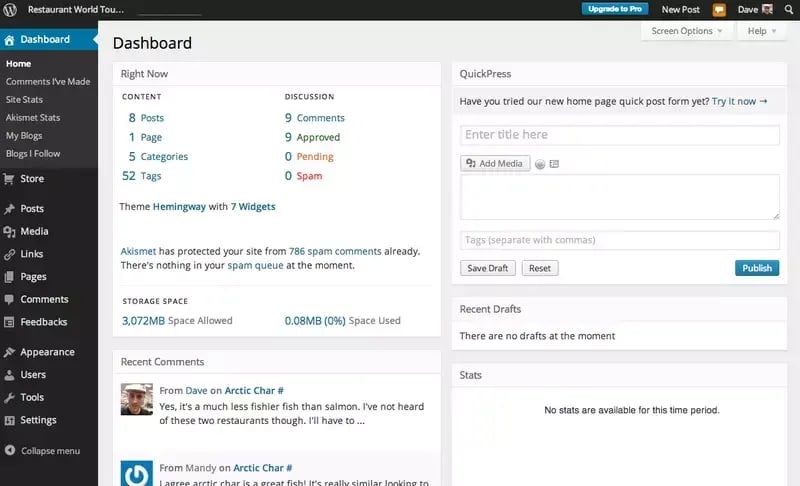
Flexibility is great, until someone has to maintain it
WordPress powers about 40% of the internet. For life science companies, it can absolutely get the job done. Here's where it genuinely shines:
- Publishing long-form scientific content and whitepapers
- Building gated portals for HCPs or clinical trial participants
- Growing organic traffic with a wide range of SEO plugins
- Highly custom website architectures with developer support
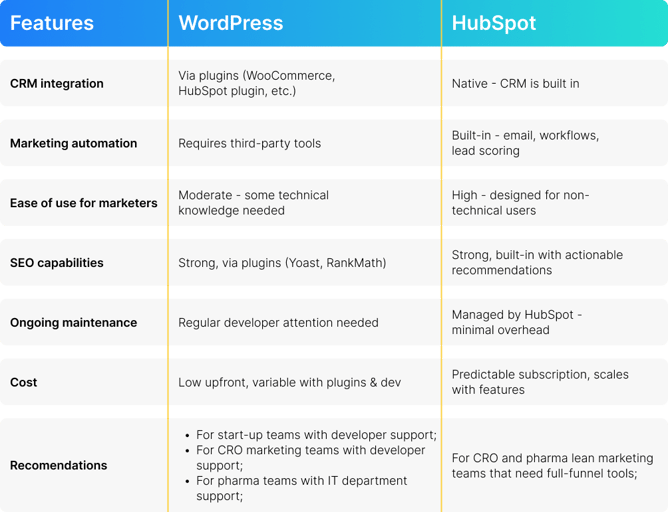
The real question is: what happens after the website is live? WordPress requires ongoing maintenance - plugin updates, security patches, and performance optimization. And when you want to connect your website data to your CRM or run automated email sequences to nurture leads, you're often stitching several tools together. HubSpot does all of that natively.
💡 Tip: If you're evaluating WordPress, ask yourself: do we have a developer on retainer or on staff? If the honest answer is no, factor in the cost of hiring one before committing to the platform.
Bottom line: WordPress is a strong choice for teams with developer resources and specific customization needs. For leaner life science marketing teams, HubSpot's all-in-one approach often saves significant time and budget in the long run.
HubSpot vs. WordPress at a glance
HubSpot vs. Joomla
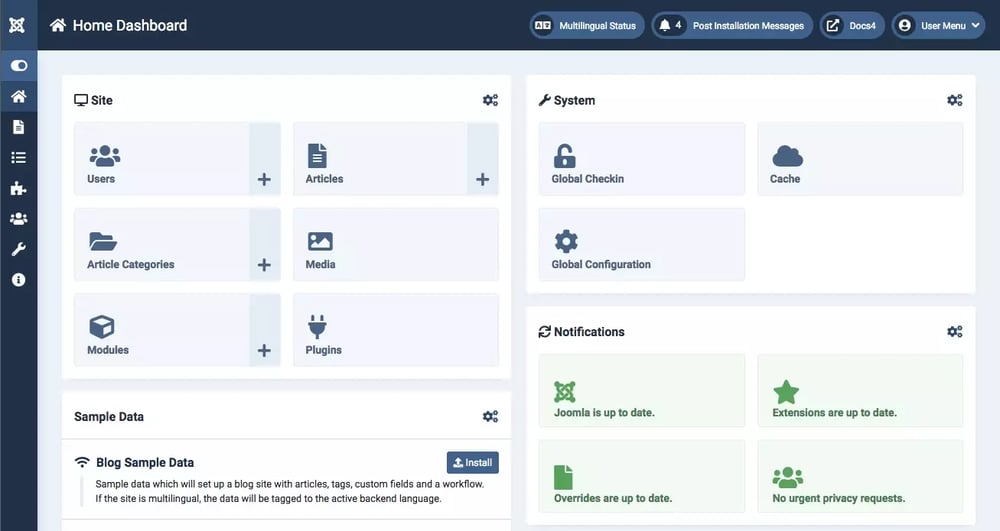
A solid engine that most people have already moved past
Joomla was a real player in the CMS world a decade ago and still has genuine strengths. It's worth considering if:
- Your organization needs strong multilingual content support across multiple markets
- You're managing a large volume of structured content (publications, departments, resources)
- You're a hospital, research institution, or academic center with complex navigation needs
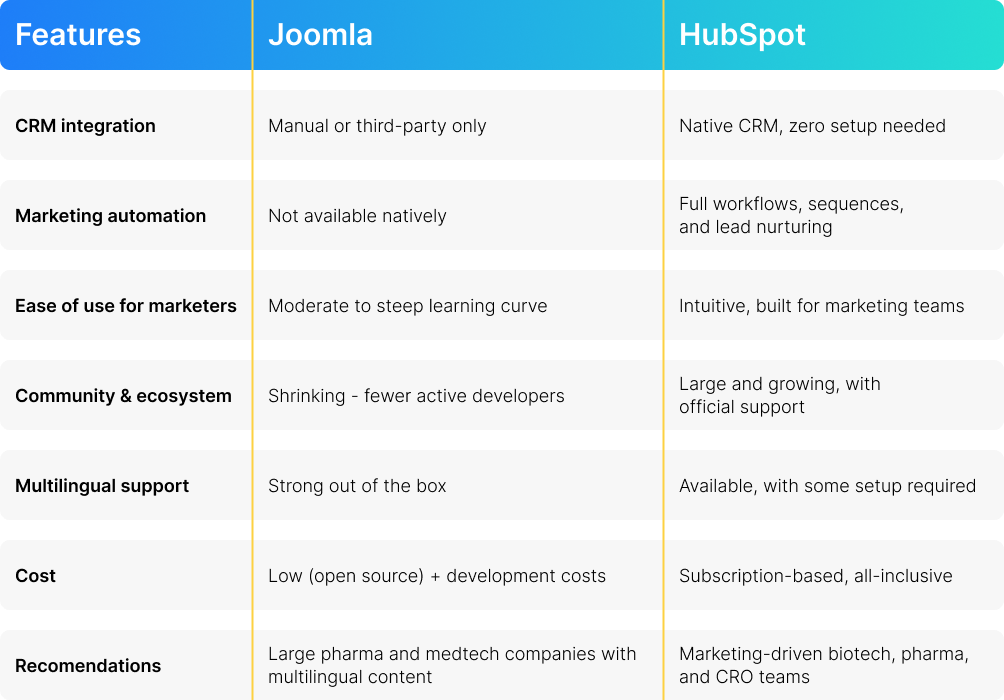
That said, the Joomla ecosystem has shrunk significantly over time. Fewer developers specialize in it, integrations with modern marketing tools are limited, and community support is a fraction of what it once was. For a life science company trying to run modern inbound marketing - lead scoring, HCP segmentation, automated nurture sequences - it would require a lot of custom development work to get there.
💡 Tip: If you're already on Joomla and it's working for you, that's a valid reason to stay. But for a new website built in 2026, it's worth exploring platforms with more active ecosystems before committing.
Bottom line: Joomla can still serve specific organizational needs, but newer platforms offer more out-of-the-box marketing capability for life science teams.
HubSpot vs. Joomla at a glance
HubSpot vs. Drupal
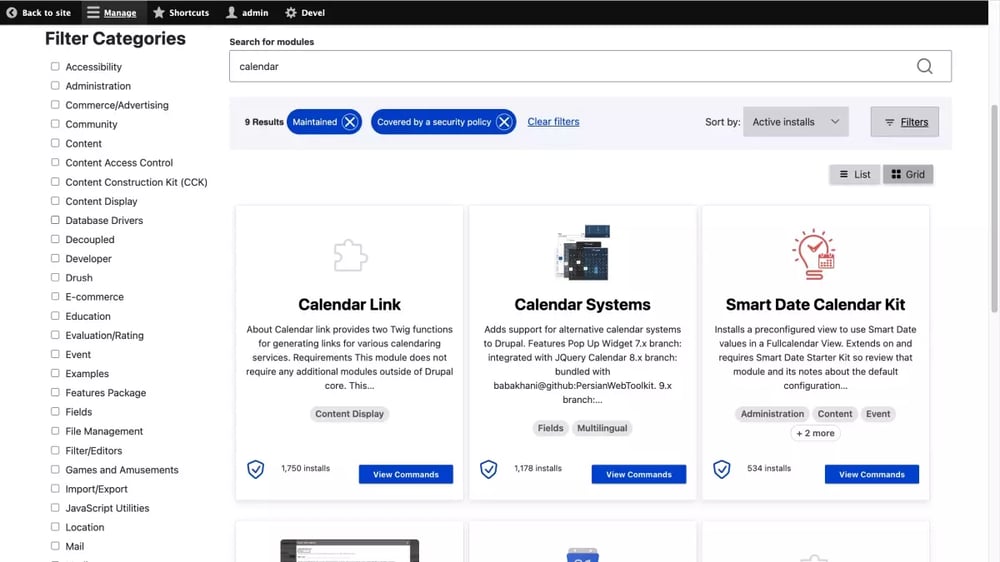
Enterprise-grade power - with an enterprise-grade price tag
Drupal is genuinely impressive for large, complex organizations, and there are real scenarios in life sciences where it makes a lot of sense:
- Large pharma companies managing sensitive data with strict access controls
- Academic medical centers or government health agencies running multiple microsites
- Organizations managing 10+ content properties across different therapeutic areas
- Environments requiring granular user permissions and advanced security compliance
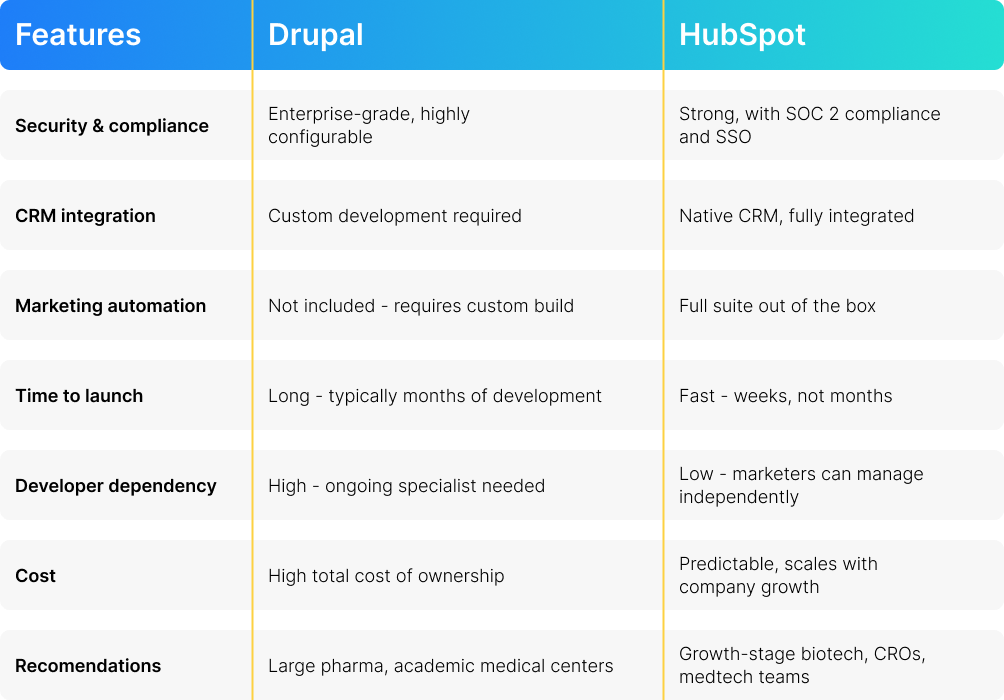
The tradeoff is the investment required - Drupal projects take longer to build, require specialized developers, and tend to have higher ongoing maintenance costs. For earlier-stage companies or mid-size CROs, that investment can feel disproportionate to the marketing outcomes you get in return. HubSpot, by contrast, is built to get your marketing running quickly - without a six-month development project before you can publish your first campaign.
💡 Tip: Before choosing Drupal, map out your actual content complexity. If you don't genuinely need enterprise-level access control or multi-site architecture, a more marketing-friendly platform will likely get you to results faster.
Bottom line: Drupal is a legitimate and powerful choice for large regulated organizations with complex infrastructure needs. For growing life science companies focused on marketing performance, lighter platforms tend to deliver better ROI.
HubSpot vs. Drupal at a glance
HubSpot vs. Wix
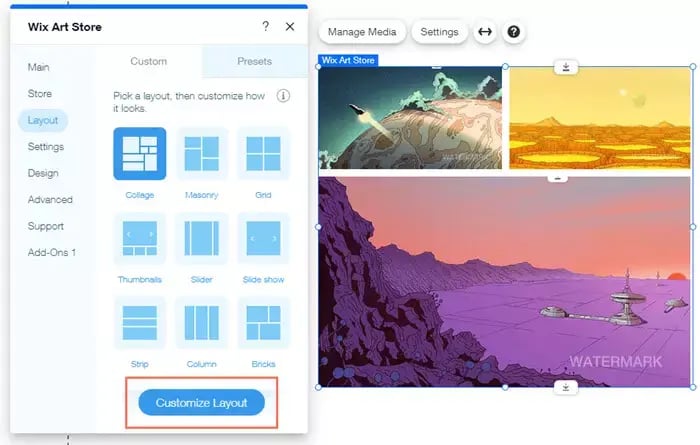
A fine start - and a smart move to grow beyond it
Wix genuinely earns its place at the table for specific situations in life sciences:
- A solo clinician or small local practice that needs a simple, location-based presence;
- A service provider - a lab supplier, a training company, a niche consultancy - whose audience is primarily regional;
- A non-clinical health and wellness brand operating in a defined local market;
- Any small team that needs something live fast, with no developer budget.
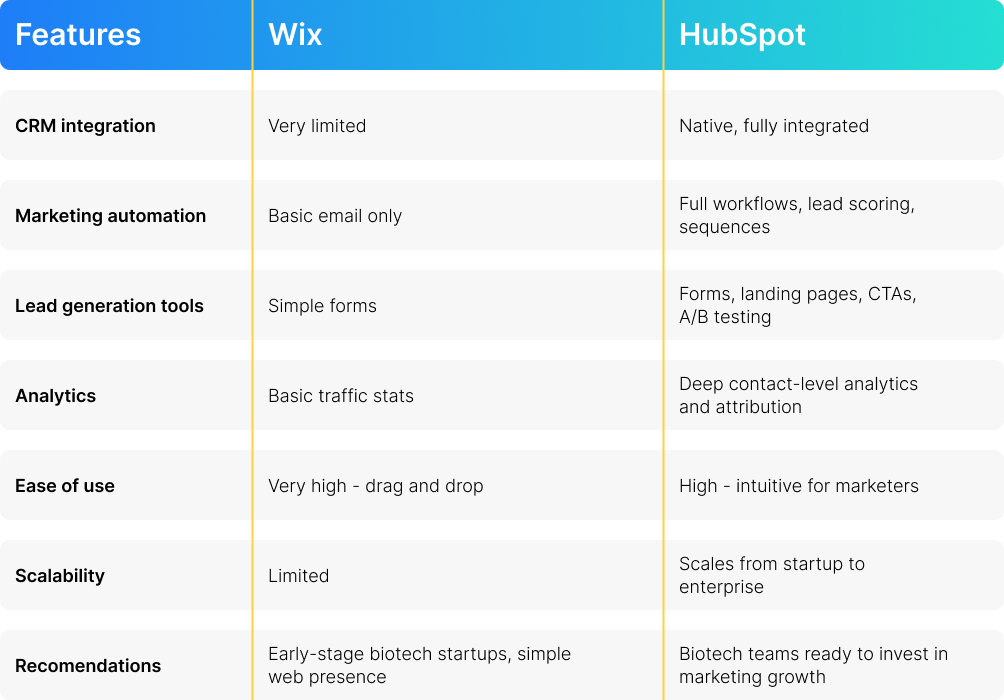
The platform looks good, builds quickly, and gets the job done at that stage. Where most life science teams start to feel friction is when marketing goals evolve. HubSpot is built for exactly that next stage - when you need to know not just how many people visited your site, but who they were, what they looked at, and how to follow up with them in a relevant and timely way.
💡 Tip: If you're launching on Wix, build with migration in mind from day one. Keep your content modular and document your site structure - it'll make moving to a more capable platform much smoother when the time comes.
Bottom line: Wix is a great starting point for early-stage companies. Most life science teams will eventually want a platform that grows with their marketing ambitions - and HubSpot is a natural next step.
HubSpot vs. Wix at a glance
HubSpot vs. Squarespace
Beautiful websites, with some trade-offs on the marketing side
Squarespace consistently produces some of the most visually polished websites of any builder, and in life sciences, that genuinely matters. It's a strong fit when:
- An aesthetic medicine clinic wants a premium, design-forward web presence
- A biotech is preparing investor materials and wants the brand to look world-class
- A medtech company is launching a device with high-quality visual storytelling
- Design quality is a top priority, and marketing automation is a secondary concern
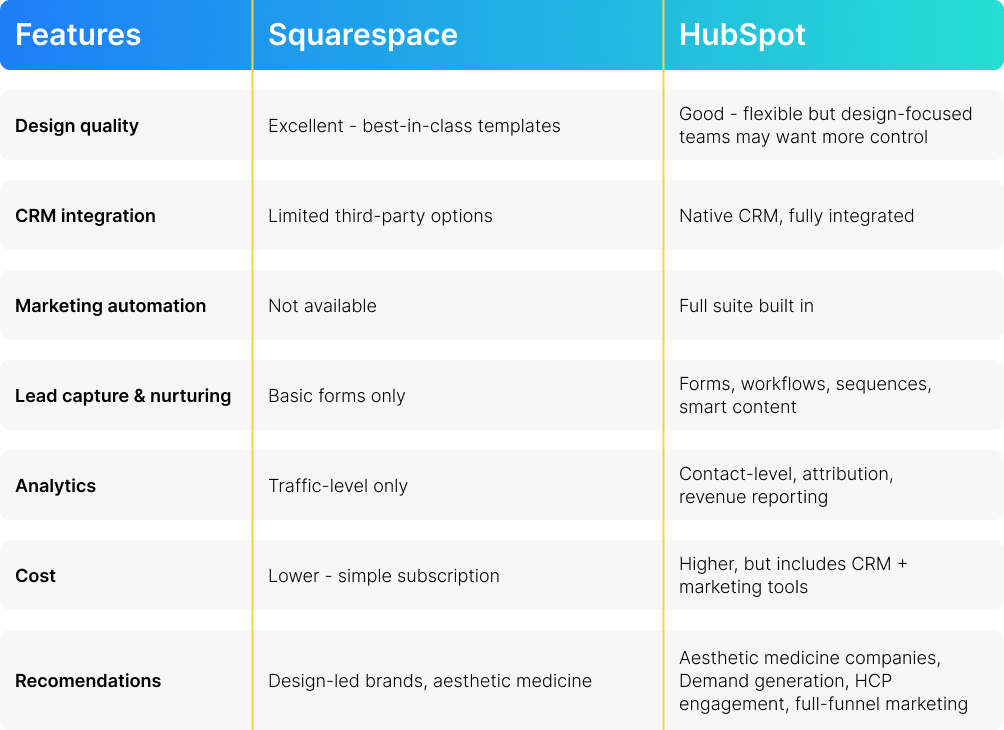
Where Squarespace has limitations is in full-funnel marketing infrastructure. HubSpot takes a different starting point - it is built to actively convert visitors into contacts, nurture them over time, and give your team the data to know what's working.
💡 Tip: Squarespace works especially well as a brand presence site paired with a dedicated CRM. If you're already using HubSpot for sales and marketing, it's worth considering whether consolidating on HubSpot's CMS would simplify your stack.
Bottom line: A genuinely excellent choice for brand-forward organizations. Life science companies with active demand generation programs may find HubSpot's marketing infrastructure more practical for day-to-day growth.
HubSpot vs. Squarespace at a glance
HubSpot vs. BigCommerce
Powerful for B2B e-commerce, with a focused scope
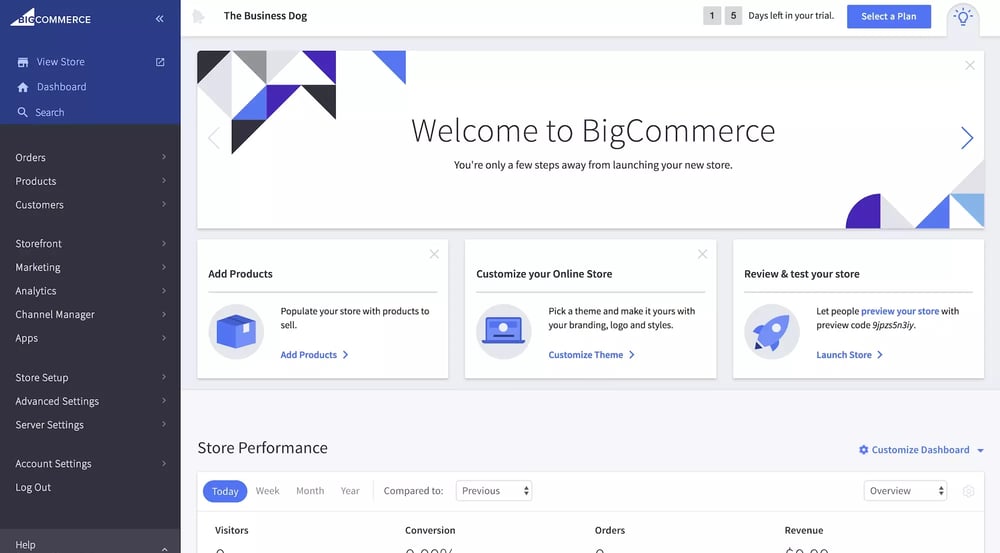
BigCommerce is a step up from many e-commerce platforms in terms of B2B-readiness, and for certain life science business models, it's worth a serious look:
- Medical device companies selling directly to hospitals or research facilities
- Lab supply or consumables distributors managing large product catalogs
- Organizations that need custom buyer portals with tiered pricing
- Businesses requiring deep integration with order management or ERP systems
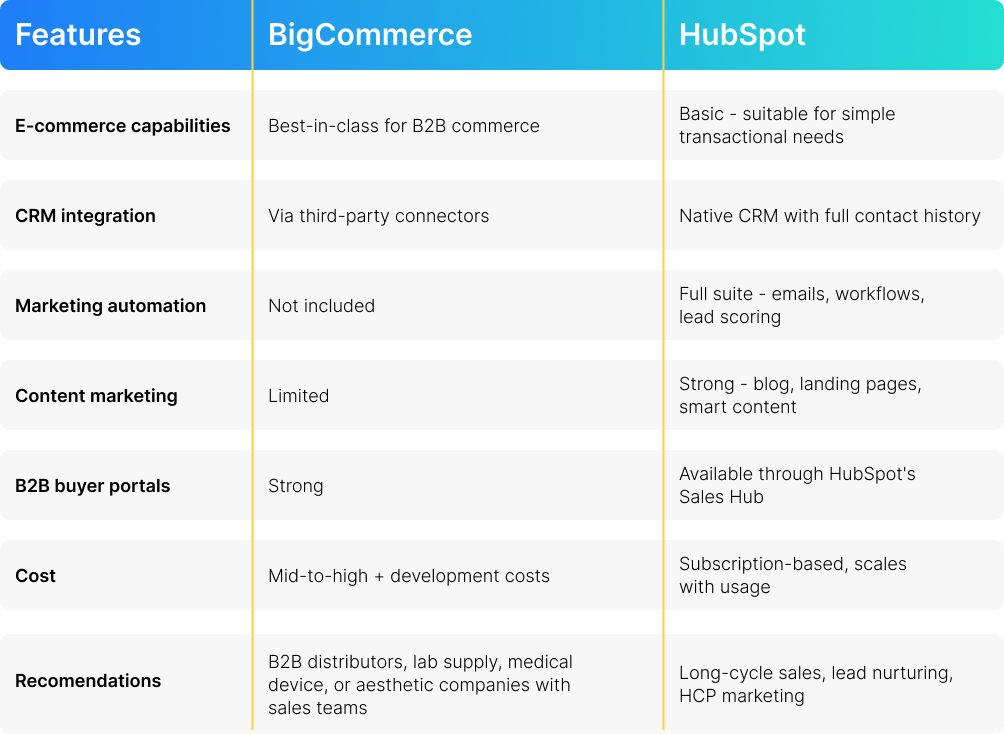
Like other commerce-first platforms, BigCommerce's scope narrows when it comes to content marketing, audience nurturing, and pipeline visibility. HubSpot approaches growth from the opposite direction - it's built around the relationship with the buyer, not the transaction. For life science companies where a deal might take 6–18 months to close, that relationship infrastructure is often more valuable than a feature-rich storefront.
💡 Tip: If your business combines direct e-commerce with content-led marketing, consider whether a hybrid approach - BigCommerce for the store, HubSpot for marketing - might give you the best of both worlds without forcing one platform to do everything.
Bottom line: A strong e-commerce platform for life science companies with a direct sales model. For marketing-led growth strategies, pairing it with HubSpot - or choosing HubSpot as your primary platform - tends to give more complete coverage.
HubSpot vs. BigCommerce at a glance
HubSpot vs. Webflow

The most interesting alternative - for the right team
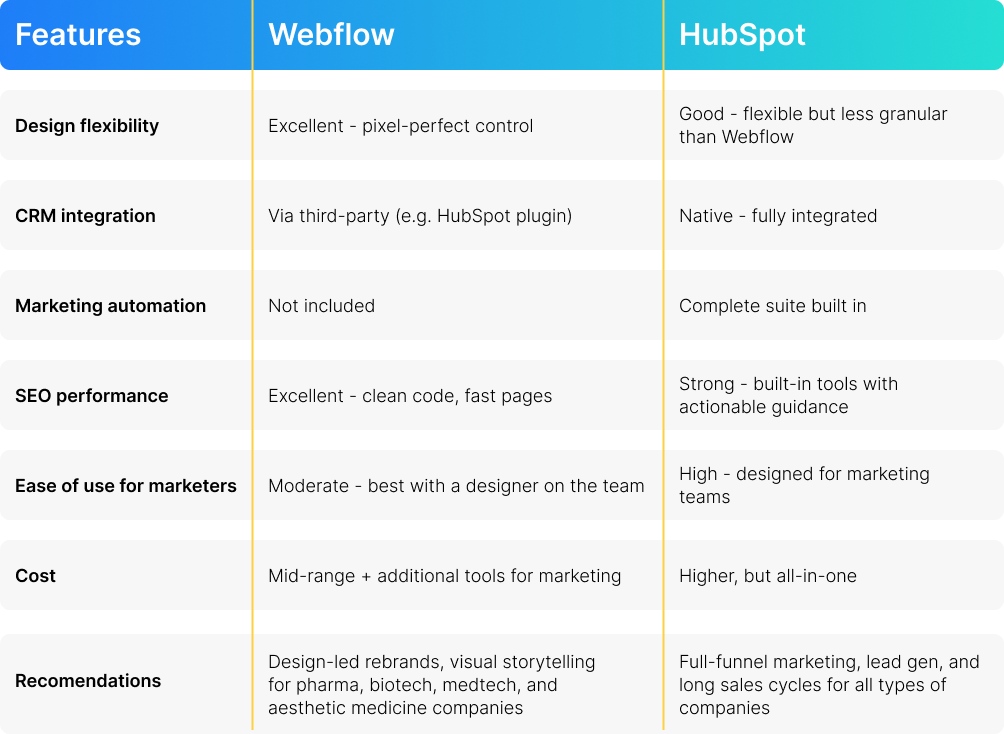
Webflow has earned real respect in the design and marketing community, and genuinely deserves consideration for life science companies. It stands out in several important ways:
- Full visual design control without writing code
- Clean, fast-loading pages that perform well on SEO
- Modern design workflows that designers and marketers genuinely enjoy
- A strong fit for brand-forward organizations that want a distinctive look
In life sciences specifically, Webflow makes a lot of sense when visual presentation is the priority: a biotech building an investor-facing site ahead of a funding round, a medtech startup launching a flagship product with interactive visuals, or a company rebranding and wanting something that stands out from the typical pharma website aesthetic.
The area where most life science teams will feel the gap is in built-in marketing infrastructure. HubSpot fills that gap directly - every form submission connects to a contact record, every email campaign ties back to website behavior, and your sales team can see the full picture of a prospect's journey without switching between tools.
💡 Tip: Webflow and HubSpot actually pair well together. Some life science teams use Webflow for the design and front-end experience, then connect HubSpot for CRM and marketing automation. It's worth exploring if design quality is non-negotiable for your brand.
Bottom line: A genuinely compelling choice for design-led teams with the right resources. For full-funnel marketing in life sciences, most teams find that pairing it with HubSpot - or moving fully to HubSpot's CMS - gives them the most complete and manageable solution.
HubSpot vs. Webflow at a glance
So, Which CMS Should a Life Science Company Choose?
If your primary goal is generating leads, nurturing relationships, and turning website traffic into actual business opportunities, HubSpot offers one of the most complete solutions available. It combines content management, CRM, marketing automation, and analytics under one roof, without requiring a developer to make it all work together.
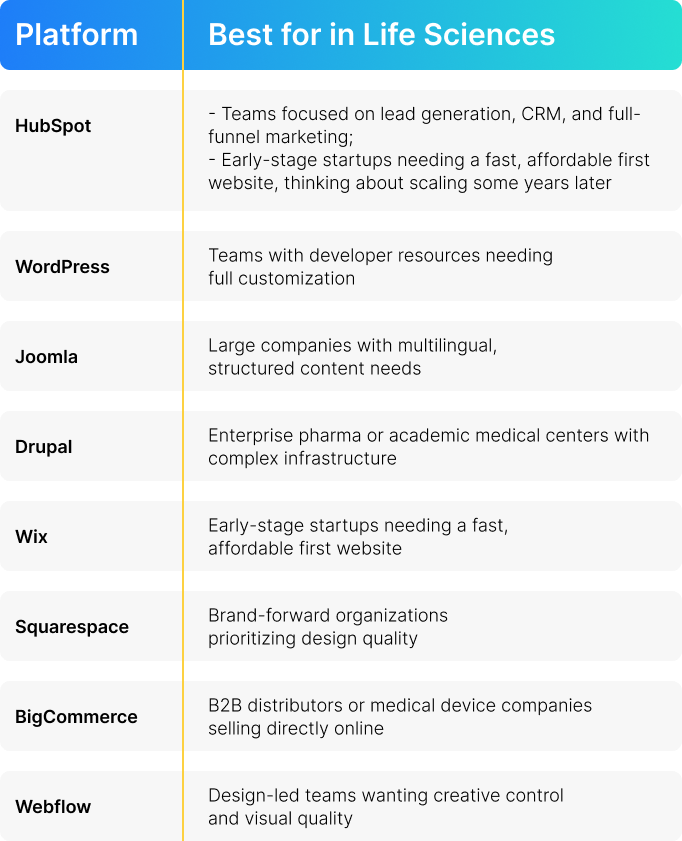
That matters especially in life sciences, where your audience is specific, your sales cycle is long, and your marketing team is often lean. Here's a quick summary to help frame the decision:
The right choice ultimately depends on where your company is today and where you're heading. If you'd like help thinking through the decision for your specific situation, we're happy to talk it through.
